
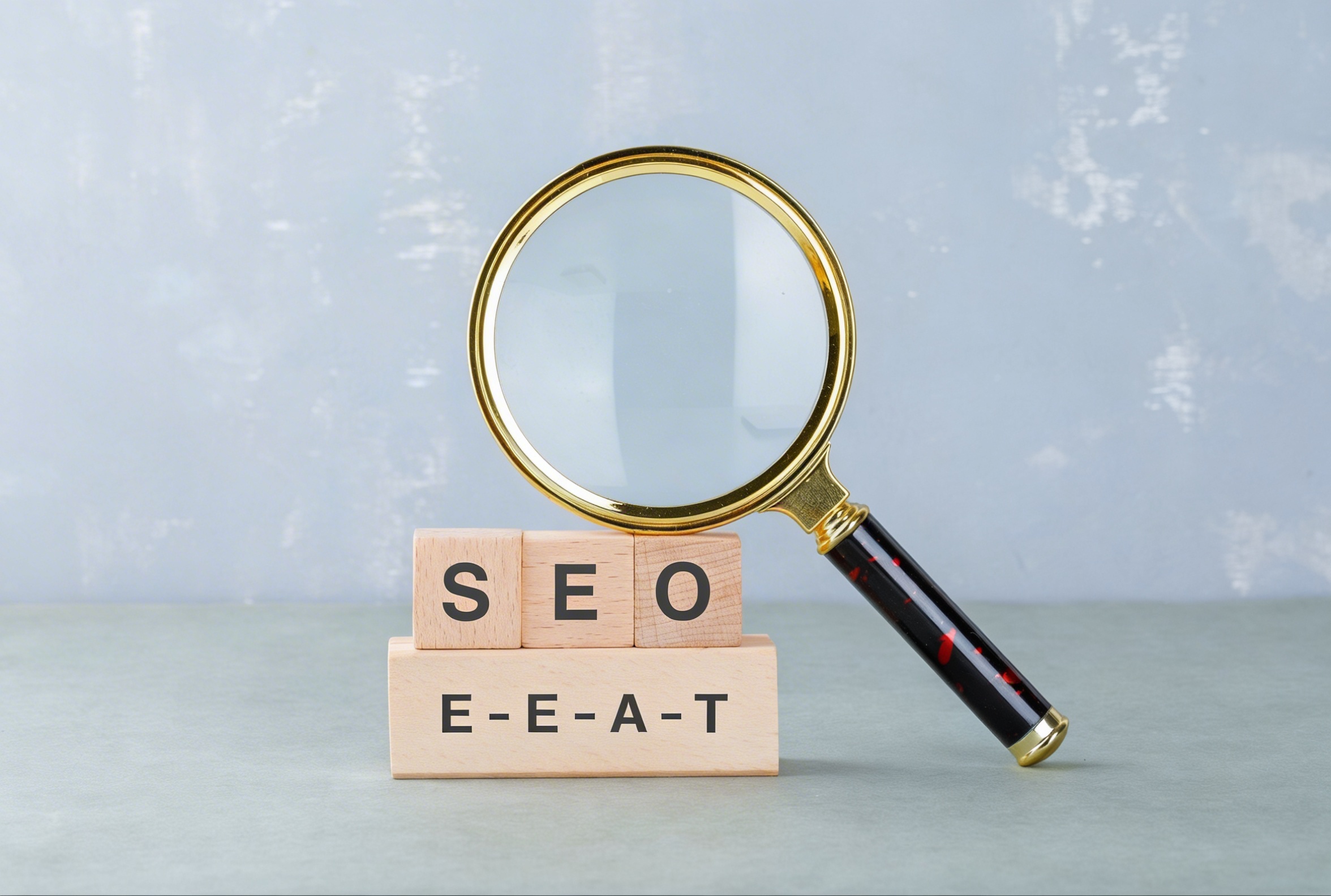

Most blog posts about E-E-A-T make it sound complicated. It isn’t. But most teams still get it wrong.
Google’s E-E-A-T framework comes down to one question: should a real person trust this content? If the answer is yes, you are already on the right track. If the answer is no, no amount of keyword optimisation will save you.
Google E-E-A-T stands for Experience, Expertise, Authoritativeness, and Trustworthiness. It is the framework Google uses to assess whether content is credible, useful, and reliable enough to deserve visibility. It looks at whether the creator has real-world experience, whether they know the topic well, whether the site or brand is recognised as a credible source, and whether the content itself is accurate and honest. Of the four, Trustworthiness matters most.
E-E-A-T is not a direct ranking factor. It is the quality standard Google’s systems are designed to reward. In simple terms, it is less about technical SEO tricks and more about proving that your content deserves to be believed.
Where Does E-E-A-T Come From? The Quality Rater Guidelines
E-E-A-T comes directly from Google's Search Quality Rater Guidelines, a publicly available document that Google uses to train thousands of human evaluators around the world. These raters do not change individual rankings. What they do is score search results and feed that feedback into the systems that refine Google's algorithm over time.
Google originally introduced E-A-T (Experience, Authoritativeness, Trustworthiness) back in its 2014 guidelines. In December 2022, Google added the first E for Experience, acknowledging that first-hand involvement with a topic is a meaningful quality signal in its own right.
The September 2025 update to the guidelines made two notable changes: it clarified the definition of YMYL topics (more on that shortly) and, for the first time, added concrete examples for evaluating AI Overviews. The full document currently runs to over 170 pages. You can read the latest version directly from Google.
What Does Each Letter in E-E-A-T Actually Mean?
Here is what each signal means in plain language, with an example for each one.
Experience: Have you actually done this?
Experience is about whether the person writing the content has genuine, first-hand involvement with the topic. This is the signal Google added in 2022, and it matters more than most people realise.
A product review written by someone who bought and used the product for three months carries more weight than one written by someone who read the product page. A travel guide written by someone who spent two weeks in Tokyo is more valuable than one assembled from Wikipedia entries.
Expertise: Do you know what you are talking about?
Expertise is your demonstrated knowledge in a subject. This can come from formal credentials (a doctor writing about medicine, a lawyer writing about contract law) or from deep practical experience (a developer with 15 years building SaaS products writing about API integrations).
Credentials matter more in some fields than others. For medical, legal, or financial content, formal qualifications are close to required. For content marketing, SEO, or product strategy, a track record of measurable results often signals expertise more credibly than a degree.
Authoritativeness: Are you recognised as a go-to source?
Authoritativeness is about recognition. It is what others say about you, not just what you say about yourself. This includes backlinks from credible sources, press mentions, citations, speaking engagements, case studies published by clients, and consistent ranking for topically relevant queries.
Building authoritativeness takes time and it cannot be faked. A financial services firm with ten years of client case studies, press coverage in the FT, and citations in academic papers has high authoritativeness. A new blog with 50 posts and no external recognition has low authoritativeness, regardless of content quality.
Trustworthiness: Is your content accurate and honest?
Trustworthiness is the most important of the four signals, according to Google's own guidelines. It covers accuracy, honesty, and transparency. This means citing sources for factual claims, being clear about who wrote the content and why, having a functional contact page and privacy policy, using HTTPS, and not making claims you cannot back up.
Trustworthiness is also where most sites lose E-E-A-T without realising it. An anonymous author, a missing about page, outdated statistics with no source, or a site without SSL can all quietly signal low trust to Google's systems.
Is E-E-A-T a Ranking Factor?
No, E-E-A-T is not a direct algorithmic ranking factor. Google itself has confirmed this. However, the signals that build strong E-E-A-T (author credentials, original data, citation quality, topical depth) are closely aligned with the signals that Google's ranking systems do reward. Improving your E-E-A-T almost always improves your rankings indirectly.
The confusion comes from how Google describes the relationship. Quality raters score content using E-E-A-T criteria. Those scores feed back into the systems that train and refine the ranking algorithm. So while no single E-E-A-T score directly moves your page up or down, the patterns that raters identify as high-quality are exactly the patterns Google's algorithm learns to reward.
In practical terms, you should treat E-E-A-T as the underlying standard of quality that SEO is built on top of. Technical SEO gets your content indexed. Keyword research identifies what people are looking for. E-E-A-T determines whether your content deserves to rank for it.

What Is YMYL and Why Does It Change the E-E-A-T Standard?
YMYL stands for Your Money or Your Life. It is Google's label for any topic where getting the information wrong could seriously harm someone's health, finances, safety, or well-being.
For YMYL topics, Google holds content to a significantly higher E-E-A-T standard. A low-quality post about the best hiking trails is unlikely to hurt anyone. A low-quality post about managing Type 2 diabetes or how to structure a will could cause real harm.
The practical implication is straightforward. If your content touches any YMYL topic, E-E-A-T is not optional. You need a named, credentialled author, cited sources for every factual claim, and clear editorial standards visible on the page.
If your content sits outside YMYL territory, such as content marketing, design, or software tools, the E-E-a-T bar is lower. That said, the principles still apply. The closer your content gets to advice that could affect someone's decisions or safety, the more rigorous your E-E-A-T needs to be.
How to Improve Your E-E-A-T: The GTMVerse Implementation System
Across our work scaling 20+ products through a structured content marketing system, we have found that E-E-A-T failures almost always fall into three categories: missing author signals, generic content without first-party proof, and sites that look untrustworthy at a glance.
The GTMVerse E-E-A-T Implementation System addresses all three layers in sequence.
To make this practical, we break E-E-A-T into a system you can implement across every page and post.
Layer 1: Make your author visible and credible
Every piece of content needs a named author with a bio that signals relevant experience and expertise. This is the single highest-impact change most sites can make in an afternoon.
- Add a byline to every post: name, role, and a one-line credential.
- Link the byline to an author page: include a photo, a short bio, links to LinkedIn, and links to other content they have written.
- For YMYL topics: add a reviewer with formal credentials (doctor, lawyer, certified financial planner) and make their review date visible.
Layer 2: Put first-hand experience in every section
The experience signal is built through specificity. Vague observations and general advice do not demonstrate first-hand experience. Specific client results, proprietary data, and named case examples do.
- Use first-person plural: 'We have seen across our client portfolio...'
- Name the client, describe the problem, and give the outcome with real numbers.
- Replace generic statistics from third-party blogs with data you have collected yourself.
Layer 3: Build trust signals into the site structure
Trust signals are not just about content. They are about the overall site environment in which that content lives.
- Check your about page exists, is up to date, and names real people.
- Add a privacy policy, terms of service, and a visible contact method.
- Make sure your site is on HTTPS and has no mixed content warnings.
- Add a publication date and an 'updated' date to every post.
- Link to primary sources for every factual claim. If you cite a statistic, link to the original research, not a blog that cited a blog.
Layer 4: Build authoritativeness through external recognition
- Authoritativeness cannot be built from inside your own site. It requires external signals: links from credible sources, press mentions, partnerships, and consistent topical coverage over time.
- Publish case studies in which clients are willing to be named.
- Build a topic cluster around your area of expertise, so Google recognises you as a consistent source on that subject. This cannot be achieved through a fixed publishing schedule. It requires a system that adapts, compounds, and builds authority over time.
- Get featured in industry publications and link back to your authoritative content from those pieces.
- Apply the same logic to SEO content strategy: topical authority is built one cluster at a time, not one post at a time.
E-E-A-T and AI Search: Why It Matters More in 2026
Most conversations about E-E-A-T focus on Google rankings. In 2026, that misses half the picture.
When someone asks ChatGPT, Perplexity, or Google's AI Overview a question, the AI system cites sources. The sources it chooses are those that demonstrate strong E-E-A-T signals: named authors with visible credentials, original data, primary source citations, and comprehensive topical coverage.
This is also why zero-click content is becoming the default model for content visibility. The answer is often delivered before a user ever visits your site, and the brands that get cited are the ones that earn trust at that moment.
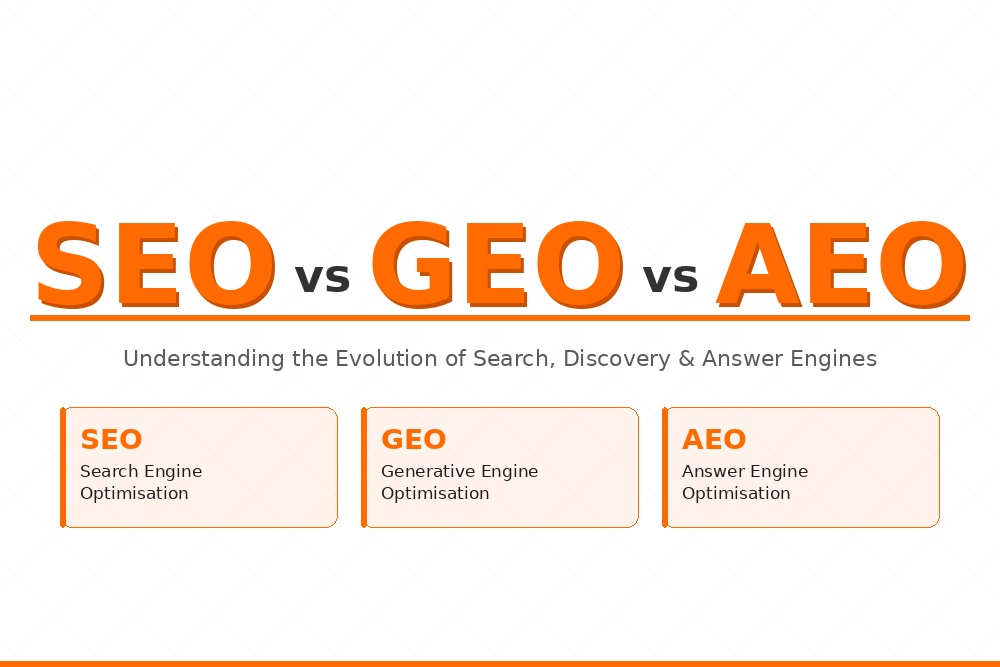
This is the core finding behind Generative Engine Optimisation (GEO), the practice of optimising content for AI citation. A 2024 study by researchers at Princeton University, Georgia Tech, the Allen Institute for AI, and IIT Delhi found that content with statistics, source citations, and fluency improvements saw up to a 40% increase in AI citation visibility.
The overlap between E-E-A-T signals and GEO signals is not a coincidence. Both reward the same thing: content that a real person would find credible, useful, and worth citing.
If you want your content to rank on Google and be cited by AI tools, building strong E-E-A-T is the single most efficient investment you can make. For a deeper look at building for all three engines simultaneously, see our post on the GTMVerse Triple-Engine Content Architecture.
E-E-A-T Mistakes That Are Quietly Hurting Your Rankings
Anonymous content
Publishing content without a named author is one of the most common E-E-A-T errors. 'The Editorial Team' or 'Staff Writer' tells Google nothing about the experience or expertise behind the content.
Fix it: name every author, link to a bio page, and include one sentence that makes their relevant experience visible.
Citing third-party blogs instead of primary sources
If you are citing a statistic, you need to link to the original research, not a blog that mentioned the research. Every hop between your claim and the primary source is a trust leak.
The difference that matters:
Weak: 'According to recent studies, 92% of organisations plan to invest in AI tools.' (No source linked.)
Strong: 'According to Gartner's 2024 Digital Markets research, 92% of organisations plan to invest in AI tools.' (Linked to gartner.com.)
Treating E-E-A-T as a one-time fix
E-E-A-T is not a checklist you complete and forget. Content that was accurate in 2022 may now be outdated. Medical guidelines change. Pricing structures shift. Algorithm updates rewrite best practices.
Add a review cycle to every major piece of content: check for accuracy every six to twelve months, update the 'last reviewed' date, and link to any new primary sources that have emerged.
Ignoring site-level trust signals
Strong content on a site with no about page, no contact details, no privacy policy, and HTTP instead of HTTPS will still struggle. Google evaluates E-E-A-T at the page level and the site level.
Run a quick trust audit before publishing: Does the site have an about page with real names? Is there a contact page and a privacy policy? Is the site on HTTPS? Are there any broken links or outdated copyright dates in the footer?
These details signal to Google and to human readers that the site is maintained and credible.
GTMVerse Point of View: E-E-A-T Is Not an SEO Task, It Is a Business Standard
Most teams treat E-E-A-T as an SEO checklist. Add an author bio. Link to Google's guidelines. Move on.
We think about it differently. E-E-A-T is the operating standard for content that earns trust at scale. The same signals that make your content rank on Google are the signals that make a first-time buyer trust your brand enough to request a demo. They are not separate projects.
Across our work with more than 20 products, the teams that build E-E-A-T into how they operate, not just how they write, are the ones that compound. Their content ranks. Their content gets cited by AI. Their brand becomes the source people reference when they explain a concept to a colleague.
That is the outcome worth building for. Not a ranking position. A reputation.
If your content is not ranking or not getting cited, the issue is rarely the writing. It is the trust signals behind it.
We can show you exactly where your content stands on experience, expertise, authoritativeness, and trust, and what to fix first.
FAQs On Google E-E-A-T
What does E-E-A-T stand for in SEO?
E-E-A-T stands for Experience, Expertise, Authoritativeness, and Trustworthiness. It is a framework from Google's Search Quality Rater Guidelines that human evaluators use to assess content quality. Google added the first E for Experience in December 2022, recognising that first-hand involvement with a topic is a meaningful quality signal.
Is E-E-A-T a direct ranking factor?
No. Google has confirmed that E-E-A-T is not a direct algorithmic ranking factor. Quality raters use it to score content, and that feedback trains Google's ranking systems over time. In practice, the signals that build strong E-E-A-T closely overlap with the signals that Google's algorithms reward, so improving your E-E-A-T almost always improves your rankings indirectly.
How do I improve my E-E-A-T score?
There is no single 'E-E-A-T score' to improve. The most effective steps are: add named author bios with relevant credentials to every post, cite primary sources for every factual claim, publish original data and real client case examples, ensure your site has an about page and contact details, and build topical authority through a consistent cluster of related content.
What is the difference between E-A-T and E-E-A-T?
Google updated E-A-T (Expertise, Authoritativeness, Trustworthiness) to E-E-A-T in December 2022 by adding an first E for Experience. The addition reflects Google's recognition that first-hand experience with a topic, such as a reviewer who actually used a product or a clinician who treats patients, adds meaningful value that expertise credentials alone do not capture.
Does E-E-A-T apply to all websites or only medical and financial sites?
E-E-A-T applies to all websites, but the standard is significantly higher for YMYL topics: health, finance, legal, safety, and government. For non-YMYL content like marketing guides or software tutorials, the bar is lower, but the principles still apply. Any content that gives advice affecting decisions should demonstrate clear experience, expertise, and honest sourcing.
How does E-E-A-T affect AI search results and citations?
E-E-A-T signals directly influence whether AI tools like ChatGPT, Perplexity, and Google AI Overviews cite your content. AI systems prefer sources with named authors, original data, primary source citations, and comprehensive topical coverage. These are the same signals that build strong E-E-A-T. Content with high E-E-A-T is more likely to be cited by AI tools and more likely to appear in AI-generated answers.
How often should I update content to maintain E-E-A-T?
Review and update high-traffic posts every six to twelve months. Update the publication date to reflect when the content was last verified. For fast-moving topics like AI, SEO, or financial markets, a shorter review cycle of three to six months is appropriate. Outdated content with stale statistics or superseded guidance signals low trustworthiness to both Google's quality systems and readers.
What is YMYL, and how does it relate to E-E-A-T?
YMYL stands for Your Money or Your Life. It is Google's classification for topics where low-quality or inaccurate information could seriously harm a reader's health, finances, safety, or well-being. For YMYL content, Google holds E-E-A-T to the highest standard. A medical article with no named author or a financial guide with no cited sources will struggle to rank regardless of other SEO signals.
FAQs
GTMVerse works best with companies where scale introduces fragmentation, not simplicity.

Growth shouldn’t feel uncertain
When Go-To-Market has an owner, clarity replaces chaos, and momentum compounds. Let us own your Go-To-Market, end to end.